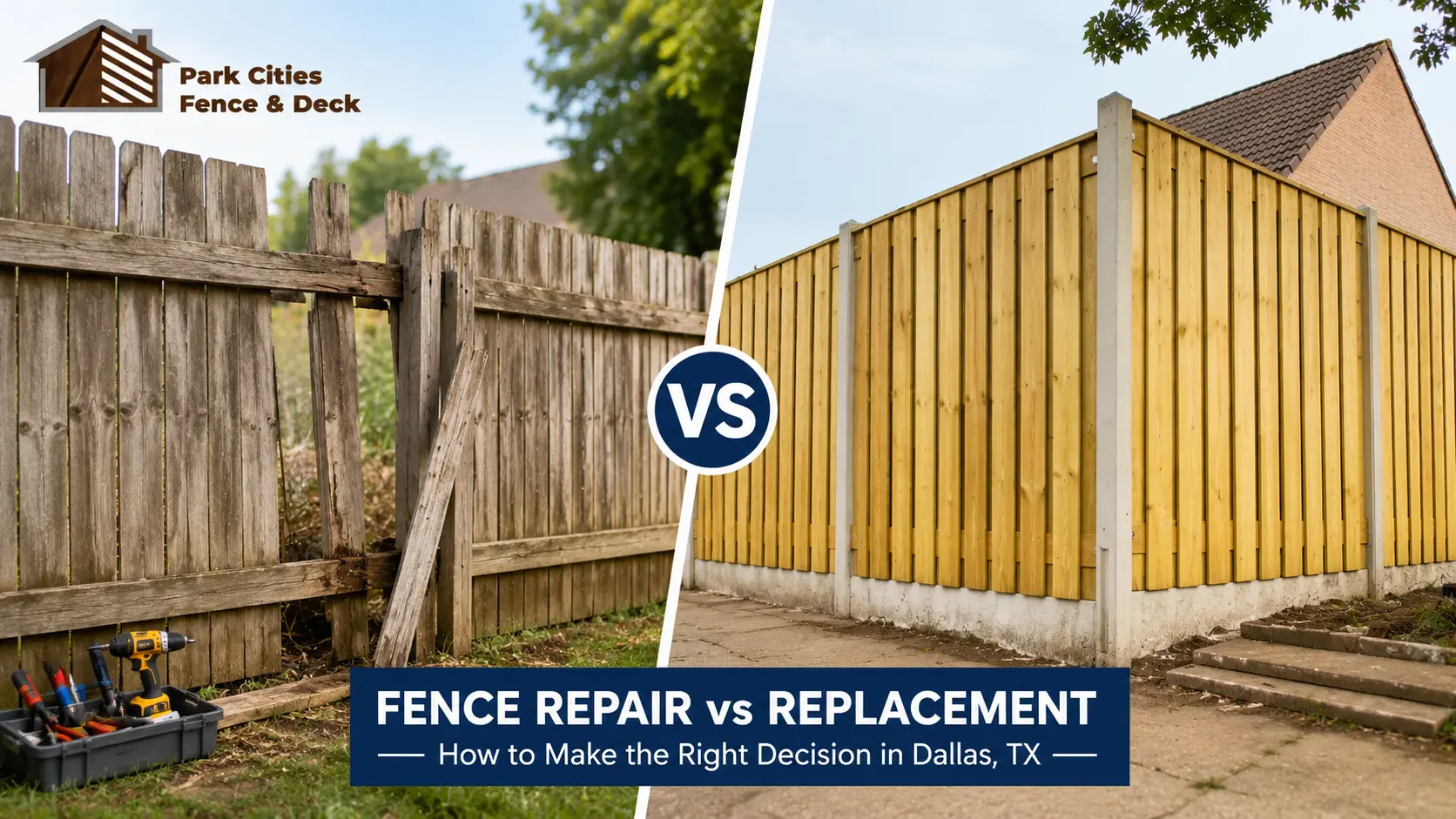
A damaged fence can quickly become more than just a cosmetic problem. Whether it’s a leaning fence post, broken panels, storm damage, or widespread rot, homeowners often face one important question:
Should you repair the fence or replace it entirely?
The answer depends on several factors, including the age of the fence, the extent of the damage, repair costs, and your long-term goals for the property.
In Dallas, where fences regularly endure intense summer heat, heavy rainstorms, high winds, and shifting soil conditions, understanding when to repair versus replace a fence can save you thousands of dollars while protecting your property’s security and curb appeal.
If you’re wondering about fence repair vs replacement, this guide will help you make the right decision.
Why Fences Fail in Dallas
Dallas weather creates unique challenges for residential and commercial fencing.
Common causes of fence damage include:
- Strong windstorms
- Heavy rainfall
- Hail damage
- Soil movement and expansion
- Rot and moisture exposure
- Termite activity
- Aging materials
- Improper installation
Even a well-built fence will eventually show signs of wear and tear. The key is determining whether the damage is localized or widespread.
Common Signs Your Fence Needs Attention
Many homeowners don’t notice fence problems until the damage becomes significant.
Watch for these warning signs:
- Leaning fence sections
- Loose or broken boards
- Missing pickets
- Rotting wood
- Rusted hardware
- Sagging gates
- Cracked posts
- Fence panels separating from posts
- Water damage
- Storm-related structural issues
Early intervention often allows for repairs instead of full replacement.
When Fence Repair Makes Sense
Not every damaged fence needs to be replaced.
In many cases, targeted repairs can restore function and appearance at a fraction of the cost.
Damage Is Limited to a Small Area
If only a few boards or panels are damaged, repairing those specific sections is often the most cost-effective solution.
Examples include:
- Broken pickets
- Minor wind damage
- Small sections of rot
- Isolated post issues
The Fence Is Relatively New
A fence that is only a few years old usually has plenty of life remaining.
Replacing an entire fence because of a single damaged section rarely makes financial sense.
Structural Integrity Remains Strong
If most posts remain stable and the overall fence structure is sound, repairs can often restore full functionality.
Cosmetic Issues Are Minor
Fading, discoloration, loose hardware, and minor warping can often be corrected without major reconstruction.
When Fence Replacement Is the Better Investment
There comes a point when repairs become temporary fixes rather than long-term solutions.
Extensive Rot or Decay
Wood rot can spread throughout a fence system.
If multiple posts and panels show signs of decay, replacement is often more cost-effective than ongoing repairs.
Multiple Structural Failures
When numerous posts are failing simultaneously, the fence’s overall integrity may be compromised.
Repeated repairs can quickly add up.
The Fence Has Reached the End of Its Lifespan
Typical fence lifespans include:
| Fence Type | Average Lifespan |
|---|---|
| Wood Fence | 15–20 Years |
| Cedar Fence | 15–25 Years |
| Chain Link Fence | 20–30 Years |
| Vinyl Fence | 20–30 Years |
| Wrought Iron Fence | 25+ Years |
Older fences often require more maintenance and become increasingly expensive to repair.
Property Value and Curb Appeal Concerns
A deteriorating fence can negatively impact:
- Home value
- Property appearance
- Security
- Buyer perception
A new fence can significantly improve curb appeal and marketability.
Storm Damaged Fence Repair in Dallas TX
Texas storms are one of the leading causes of fence damage.
High winds can cause:
- Fallen panels
- Broken pickets
- Uprooted posts
- Leaning fence sections
- Gate damage
After a storm, it is important to assess:
Repairable Damage
Often includes:
- Single fallen sections
- Detached panels
- Minor post movement
Replacement-Level Damage
May include:
- Multiple collapsed sections
- Extensive post failure
- Severe structural compromise
Professional evaluation helps determine the most economical solution.
Leaning Fence Post Repair in Dallas TX
One of the most common fence issues homeowners face is a leaning fence.
A leaning fence does not always require complete replacement.
Causes often include:
- Soil erosion
- Water saturation
- Poor original installation
- Aging concrete footings
- Storm damage
In many situations, individual posts can be reset or replaced while preserving the remainder of the fence.
However, if numerous posts are leaning, replacement may provide a better long-term return on investment.
Understanding Fence Panel Replacement Costs in Dallas
Fence panel replacement is often one of the most affordable repair options.
Several factors influence cost:
Material Type
Costs vary between:
- Cedar
- Pressure-treated wood
- Vinyl
- Composite
- Metal fencing
Number of Panels Damaged
Replacing one panel is considerably less expensive than replacing multiple sections.
Labor Requirements
Installation complexity affects overall repair costs.
Matching Existing Materials
Older fences may require special ordering to match existing styles and finishes.
When evaluating fence panel replacement cost in Dallas, homeowners should compare repair costs against the remaining lifespan of the fence.
Comparing Repair Costs vs Replacement Costs
Many homeowners focus solely on immediate expenses.
However, long-term value matters.
Repair Is Usually Better When:
- Damage affects less than 20–30% of the fence
- Fence posts remain structurally sound
- The fence is under 10 years old
- Materials are readily available
Replacement Is Usually Better When:
- Damage affects more than 30–40% of the fence
- Multiple posts have failed
- Significant rot exists
- Repairs are becoming frequent
A professional inspection can help identify the most cost-effective path forward.
Benefits of Fence Rehabilitation
Fence rehabilitation provides a middle-ground solution between repair and replacement.
A qualified fence rehabilitation contractor in Dallas may recommend:
- Post reinforcement
- Structural stabilization
- Panel replacement
- Hardware upgrades
- Gate restoration
- Protective staining or sealing
Fence rehabilitation can extend fence life while reducing overall costs.
Questions to Ask Before Deciding
Before committing to repairs or replacement, ask:
How old is the fence?
Age often predicts future maintenance needs.
How widespread is the damage?
Localized problems are usually repairable.
What is the remaining lifespan?
Understanding remaining service life helps justify investment decisions.
Are replacement materials available?
Matching older fences can sometimes be difficult.
Will repairs solve the problem permanently?
Temporary repairs may cost more over time than replacement.
Why Professional Fence Inspections Matter
A fence may appear repairable on the surface while hiding deeper structural issues below ground.
Professional inspections can identify:
- Hidden rot
- Post instability
- Soil movement
- Foundation problems
- Future failure risks
This evaluation helps homeowners make informed decisions rather than relying on guesswork.
At Park Cities Fence & Deck Company, we help Dallas homeowners assess fence damage honestly and recommend solutions based on long-term value—not short-term sales tactics.
Whether your fence needs a simple repair, complete replacement, or professional rehabilitation, our experienced team can guide you through the process and help protect your investment.
Conclusion
Deciding between fence repair and replacement isn’t always straightforward.
Minor issues such as broken boards, isolated storm damage, or a single leaning post can often be repaired affordably. However, widespread structural issues, extensive rot, or aging materials may make replacement the smarter long-term investment.
The best way to determine the right solution is through a professional inspection that evaluates both current damage and future performance.
If your fence has been damaged by weather, age, or wear and tear, contact Park Cities Fence & Deck Company today for expert guidance and a customized recommendation.
FAQs
How do I know whether my fence should be repaired or replaced?
If the damage is localized and the fence structure remains strong, repairs are often sufficient. Widespread damage, multiple failing posts, or extensive rot usually indicate replacement may be more cost-effective.
Can a leaning fence be repaired?
Yes. Many leaning fences can be repaired by replacing or resetting damaged posts. A professional inspection can determine whether repairs are feasible.
How much does fence panel replacement cost in Dallas?
Costs vary depending on materials, labor requirements, and the number of panels needing replacement. A local contractor can provide an accurate estimate.
Is storm-damaged fencing covered by insurance?
In many cases, homeowner’s insurance may cover storm-related fence damage. Coverage depends on your specific policy and circumstances.
How long should a wood fence last in Dallas?
Most wood fences last between 15 and 20 years when properly maintained and protected from moisture damage.
What does a fence rehabilitation contractor do?
A fence rehabilitation contractor restores and strengthens existing fencing through repairs, post reinforcement, panel replacement, and structural improvements to extend fence lifespan.