You’ve got the fence. Maybe it’s a beautiful cedar privacy fence you had installed last year, or a classic wood picket that frames your front yard perfectly. But every time you pull into your driveway or let the dog out back, something feels incomplete. That missing piece? A gate.
A gate isn’t just an entry point it’s the finishing touch that ties your whole outdoor space together. It controls access, adds security, improves curb appeal, and if you go the automated route, it adds a level of daily convenience you’ll wonder how you lived without.
But not all gates are created equal, and getting the wrong one installed can be a frustrating and expensive mistake. This guide walks you through everything you need to know about gate installation in the Dallas area choosing the right style and material to understanding costs and what the installation process actually looks like.
Why a Quality Gate Makes a Bigger Difference Than You’d Think
Here’s a scenario most Dallas homeowners can relate to: a builder-grade gate that sags on its hinges after two Texas summers, a latch that sticks every time you try to open it, or a gate that swings open on its own in a strong wind. It’s not just annoying it’s a security issue.
A well-built, properly installed gate does several things at once. It keeps kids and pets safely inside your yard. It deters opportunistic intruders. It controls who has access to your property. And in neighborhoods where exterior aesthetics matter Highland Park, University Park, Preston Hollow a quality gate signals that you take pride in your home.
The difference between a cheap gate and a quality installation often comes down to two things: the material and the post work. A gate is only as solid as the posts anchoring it. Concrete-set, properly sized posts are non-negotiable for a gate that functions reliably year after year.
Gate Types: Which One Is Right for Your Property?
Before you pick a material or style, it helps to understand the functional categories. The right gate type depends on where it’s going and what you need it to do.
Swing gates
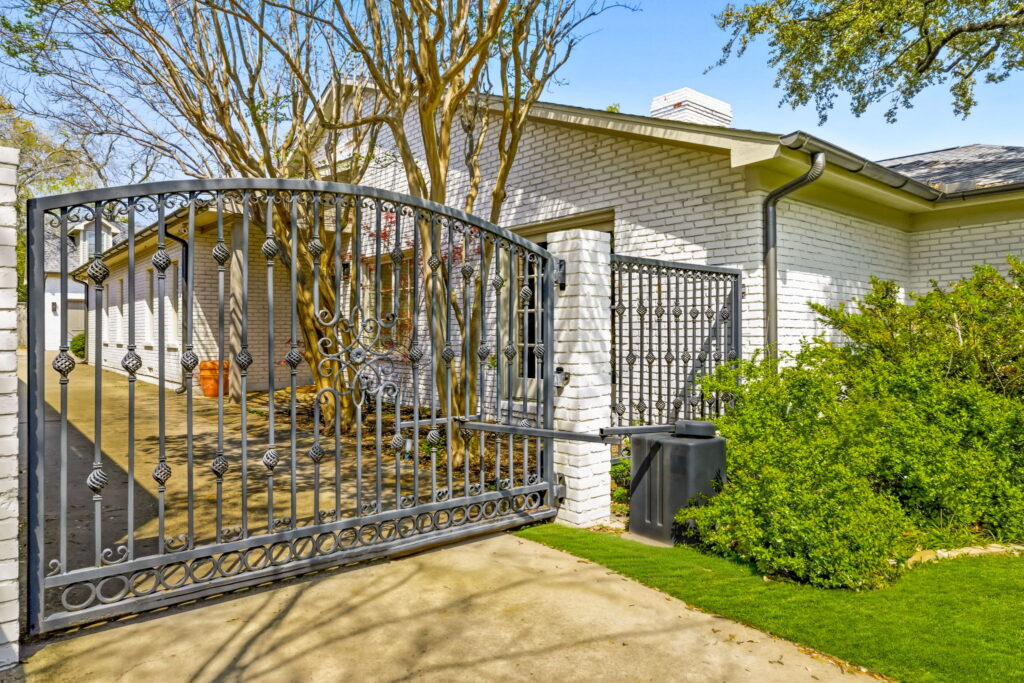
Swing gates are the most common residential option. They open on hinges either inward or outward and work well for both pedestrian walkways and driveways. Single swing gates cover narrower openings; double swing gates (also called French gates) are used for wider driveways. They’re straightforward, reliable, and easy to automate
Sliding gates
Sliding gates roll horizontally along a track rather than swinging open. They’re the smart choice when you don’t have room for a gate to swing tight driveways, sloped entries, or properties where a swinging gate would block traffic flow. They’re also a popular choice for automated driveway gates.
Pedestrian gate
Pedestrian gates are smaller access gates built into a fence line think a side gate to your backyard or a garden entry. They don’t need to handle vehicle weight, which gives you more material and style flexibility.
Automatic gates .
Automatic gates can be swing or sliding, with a motorized opener controlled by a keypad, remote, or intercom system. They’re increasingly popular in DFW for both driveway and estate-style entries. If you’re installing a new gate anyway, adding automation at the same time is almost always more cost-effective than retrofitting later.
Choosing the Right Gate Material for Dallas Weather
The Dallas climate is harder on outdoor materials than people realize. You need something that can handle summer heat, UV exposure, occasional heavy rain, and those unpredictable winter freezes. Here’s how the most common gate materials stack up:
Cedar wood
is the most popular choice for residential gates in the DFW area, especially when it needs to match an existing wood fence. Cedar handles the Texas climate well, resists moisture and insects naturally, and can be stained or painted to any color. With proper sealing every few years, a cedar gate looks great for well over a decade.
Wrought iron and steel
are ideal for driveway entries and properties looking for a more formal, elegant aesthetic. Iron gates are incredibly durable and can be powder-coated to resist rust. They’re heavier than wood, which actually works in their favor for stability and they pair beautifully with brick or stone columns.
Aluminum
offers the look of iron at a lighter weight and lower cost. It doesn’t rust, which is a real advantage in the Dallas humidity. It’s a strong middle-ground option for homeowners who want the metal aesthetic without the iron price tag.
What the Gate Installation Process Looks Like
Whether you’re adding a gate to an existing fence or having both installed at the same time, knowing what to expect makes the whole process less stressful. Here’s the typical flow for a professional gate installation in Dallas:
Consultation and measurements.
offers the look of iron at a lighter weight and lower cost. It doesn’t rust, which is a real advantage in the Dallas humidity. It’s a strong middle-ground option for homeowners who want the metal aesthetic without the iron price tag.
Post setting.
Gate posts carry more stress than standard fence posts they support the weight of the gate through thousands of open-and-close cycles. They need to be set deeper and anchored in more concrete. Skimping here is the number one reason gates fail prematurely.
Gate fabrication or delivery.
Depending on the material, your gate may be built on-site (common for wood) or prefabricated and delivered (common for iron and aluminum). Custom sizing is standard for most residential projects.
Hardware and automation installation.
Hinges, latches, locks, and if applicable the gate opener and access control components are installed and tested. A good contractor won’t hand off the job until everything is functioning smoothly.
How Much Does Gate Installation Cost in Dallas?
Gate pricing varies widely depending on size, material, and whether automation is involved. Here’s a realistic ballpark for the Dallas market:
- Basic wood pedestrian gate (installed): $300 – $700
- Wood driveway swing gate (single, installed): $800 – $1,800
- Double wood or iron driveway gate (installed): $1,500 – $4,000+
- Automated gate opener (added to above): $1,000 – $3,000 depending on system
These ranges assume professional installation with properly set posts. As always, get multiple quotes and make sure each one clearly specifies what’s included especially post work, hardware, and any electrical required for automated systems.
Conclusion: Don’t Let an Incomplete Fence Hold Your Property Back
A gate is one of those upgrades that seems simple on the surface but makes a real daily difference. The right gate properly installed adds security, privacy, and a polished look that ties your entire yard together. The wrong one becomes a source of constant frustration.
Whether you’re looking for a basic wood side gate to keep the dog in, a double driveway gate for a grander entry, or a fully automated system you can control from your phone, the key is working with a contractor who understands both the structural demands and the design side of the job.
Park Cities Fence & Deck has been installing gates across the Dallas–Fort Worth area for years. We handle everything from simple pedestrian gates to custom automated driveway entrances and we do it with the same attention to quality and honest communication we bring to every project. Call us at (214) 755-8100 or visit parkcitiesfence.com to schedule your free estimate today.
FAQs
Can I add a gate to my existing fence?
Yes, in most cases. A contractor will assess whether your existing posts are adequate to support a gate, or whether new gate posts need to be installed. Adding a gate to an existing fence is a very common project and usually straightforward.
How long does gate installation take?
A standard residential gate installation typically takes half a day to a full day, depending on complexity. Automated gate systems with electrical work may take longer. Your contractor should give you a clear timeline before starting.
What’s the most durable gate material for Dallas weather?
Cedar wood and powder-coated iron or steel are both excellent choices for the DFW climate. Cedar handles heat and humidity well when sealed regularly. Iron and steel are extremely durable and rust-resistant when properly coated. The best choice depends on your budget, aesthetic preference, and how much maintenance you’re willing to do.
Is an automatic gate worth the extra cost?
For most homeowners with driveway gates, yes especially if you’re installing a new gate anyway. Automation adds convenience, security, and perceived value to your home. If you plan to add it eventually, doing it during the initial installation saves labor costs compared to retrofitting later.
Do I need a permit for a gate in Dallas?
It depends on your city and HOA. Some municipalities require permits for driveway gates or automated systems, particularly those affecting street access. Your fence contractor should be familiar with local requirements and can guide you through the process.
How do I maintain a wood gate so it doesn’t sag?
Proper maintenance starts at installation solid, deep-set gate posts in concrete are the foundation. Beyond that, reseal or restain the wood every 2–3 years to prevent moisture absorption, check and tighten hinges annually, and use a gate support wheel or tension rod if the gate spans a wide opening. Catching a slight sag early is far easier and cheaper than repairing a fully dropped gate.