Local Rules · Dallas, Texas
Fence Rules in Dallas Conservation and Historic Districts: What Each Ordinance Says
What the Lakewood, M Streets, Greenway Parks and Swiss Avenue ordinances say about fences, and which city approval comes first.
 By Jack Johnson, owner of Park Cities Fence & Deck · · 12 min read · 2,808 words
In short
Yes, you can build or replace a fence in a Dallas conservation or historic district, but the district approval comes before the permit. In a conservation district, city staff check the fence against that district's ordinance on a Work Review Form. In a historic district you need a Certificate of Appropriateness. Almost every district we read bans front yard fences and sets its own heights and materials.
In this guide
- Can I build or replace a fence in a Dallas conservation or historic district?
- How do I find out whether my address is inside a district?
- What does each district's ordinance say about fences?
- What is the maximum fence height in the Lakewood Conservation District?
- What are the fence rules in Greenway Parks?
- What approval does a fence in a conservation district need first?
- How does a Certificate of Appropriateness for a fence work in a historic district?
- Does replacing an old fence in the same spot still need district approval?
- Which fence designs fit these districts?
- How does Park Cities Fence & Deck handle a fence in a Dallas district?
Need this done? See wood fencing.
You own a 1920s Tudor in Lakewood or a cottage in the M Streets, the old fence is leaning, and a neighbor mentions that "the district" has to sign off. That is true. The city has written down what a fence may look like on your street, in an ordinance you can read. The hard part is that the ordinances do not match each other.
We are Park Cities Fence & Deck, a Lakewood fence company that builds cedar, iron and masonry fences across the older parts of Dallas. For this guide we read the fence section of eight district ordinances on the City of Dallas website and wrote down what each one says, with the section number. Rules change, so confirm the current text with the city before you build.
Can I build or replace a fence in a Dallas conservation or historic district?
Yes. No district ordinance we read bans fences. They control where the fence sits on the lot, how tall it is and what it is made of, and the city reviews the plan before work starts.
The two kinds of district work differently. The city describes a conservation district as a change in zoning, tailor-made to a neighborhood, whose regulations become the zoning for the area. A Work Review Form and plans are reviewed by Conservation District staff, in addition to any review required for a building permit.
A historic district, which the city also calls a Landmark District, goes further. All exterior modifications are regulated, and the Office of Historic Preservation states it plainly in its FAQ: all fences and gates require a Certificate of Appropriateness before the start of work.
Lakewood (CD 2), Hollywood/Santa Monica (CD 6), the M Streets (CD 9), Greenway Parks (CD 10) and M Streets East (CD 11) are conservation districts. Swiss Avenue (H/1) and Junius Heights (H/128) are historic districts. An address in neither follows only the citywide rules in our guide to fence height rules in Dallas, plus any private deed restrictions.
How do I find out whether my address is inside a district?
Check the address, not the neighborhood name. The Lakewood Conservation District covers the city blocks listed in its ordinance, around Lakewood Boulevard, Lakeshore Drive and Tokalon Drive, not everything people call Lakewood. The M Streets are split between two districts with two different fence rules.
Three city sources settle it. If they leave any doubt, call Planning & Development at (214) 948-4458, the number on the city's conservation districts page.
- Look up the zoningSearch your address on the City of Dallas zoning map. A conservation district is a zoning district with its own number, such as CD 2 for Lakewood or CD 9 for the M Streets, so look for that in the zoning shown for your lot.
- Open the district mapEach conservation district has its own page on the city website with the ordinance and a boundary map. Lakewood's map also shows which tract you are in, and the tract decides which fence rules apply.
- Check the Landmark Districts listHistoric Preservation lists every historic district with its H number and links a map and the ordinance. Swiss Avenue is H/1 and Junius Heights is H/128.
What does each district's ordinance say about fences?
The table holds only what we read in the ordinance text posted by the City of Dallas. Where an ordinance is silent, the citywide fence standards in the Dallas Development Code still apply, including the 9-foot ceiling.
| District and source | Front yard | Height | Materials | Who reviews |
|---|---|---|---|---|
| Lakewood CD 2, Tracts I to III (Ord. 20009, Sec. 8(a)) | Fences and walls prohibited, except balustrades, porch rails, hand rails and retaining walls under six inches | Not stated: citywide rules apply | Not stated | Conservation District staff |
| Lakewood CD 2, Tract IV (Ord. 33026, Sec. 20(e)) | Prohibited. Fences start at least five feet behind the front corner of the house | Six feet in a side yard, eight feet in a rear or cornerside yard | Brick that matches the house, stone, wood, wrought iron or a look-alike. No chain link | Conservation District staff |
| M Streets / Greenland Hills CD 9 (Ord. 25116, Exhibit A (d)(13)) | Not allowed. Side fences start five feet behind the front corner, corner lot fences behind the mid-point of the house | Not stated: citywide rules apply | If seen from a street: brick that matches the house, stone, wood or wrought iron | Conservation District staff |
| M Streets East CD 11 (Ord. 32107, Exhibit A (e)(18)) | Allowed up to four feet. No chain link | Nine feet in side and rear yards | Front: brick that matches, decorative or hog wire, stone, stucco, wood, wrought iron or compatible materials | Conservation District staff |
| Hollywood/Santa Monica CD 6 (Ord. 21608 as amended by 26884, Sec. 7(m)) | Prohibited, except balustrades, porch and hand rails and retaining walls up to 30 inches. Fences start five feet behind the front facade | Six feet in a cornerside yard | Wrought iron and metal fences must be typical of the style and period of the house (Sec. 7(k)) | Conservation District staff |
| Greenway Parks CD 10 (Ord. 25226, Exhibit A (e)(13)) | Not allowed within the front yard setback | Seven feet in interior side yards and along Inwood Road or the Tollway. Five feet on the Greenway boulevards and in parkway setbacks | No chain link or wire. No wood on the boulevards or in parkway setbacks, where fences must be 70 percent open | Conservation District staff. The city recommends a consultation first |
| Junius Heights H/128 (Ord. 26331, criteria 3.6) | New fences not permitted. Interior side fences stay in the rear half of the side yard, behind the neighbor's open front porch | Nine feet in the rear yard and rear half of side yards, eight feet where a fence is allowed in the front half | If visible from the street: brick, stone, wood, metal pickets or a combination. Finished side faces out | Historic Preservation staff or the Landmark Commission |
| Swiss Avenue H/1 (Sec. 51P-63.116(2)(B), Area A) | Not permitted. Interior side fences stay in the rear half of the side yard, behind the rearmost side projection of the house | Nine feet | Chain link, wrought iron, wood, brick or stucco. Masonry must match the house. Painted metal in black, dark green or dark brown | Historic Preservation staff or the Landmark Commission |
What this means for you: Plan on no fence in front of the house in seven of these eight districts, and expect the height to depend on which yard and which street the fence faces. Other districts, such as Munger Place, Kessler Park, Vickery Place and Belmont Addition, have their own ordinances that we did not read for this guide. We read the one for your address before we draw anything.
What is the maximum fence height in the Lakewood Conservation District?
It depends on your tract. In Tract IV, the expansion area that took effect on March 31, 2025, the ordinance sets six feet in a side yard and eight feet in a rear or cornerside yard. In Tracts I, II and III, the original 1988 district, the ordinance sets no fence height of its own, so the citywide Dallas limits apply.
Both parts keep fences out of the front yard. Tract IV defines the front yard as the area between the front facade and the street, excluding porches, and adds two details: the fence must start at least five feet behind the front corner of the house, and a courtyard wall up to four feet tall around the front entrance may come five feet into the front yard.
Tract IV also names its materials: brick that matches the main structure, stone, wood, wrought iron or materials that look like wrought iron, or a mix. Chain link is prohibited. A cedar privacy fence or an ornamental steel fence fits that list. The earlier tracts list no fence materials, but the ordinance applies to any work on a lot whether or not it needs a building permit (Section 9(b)).
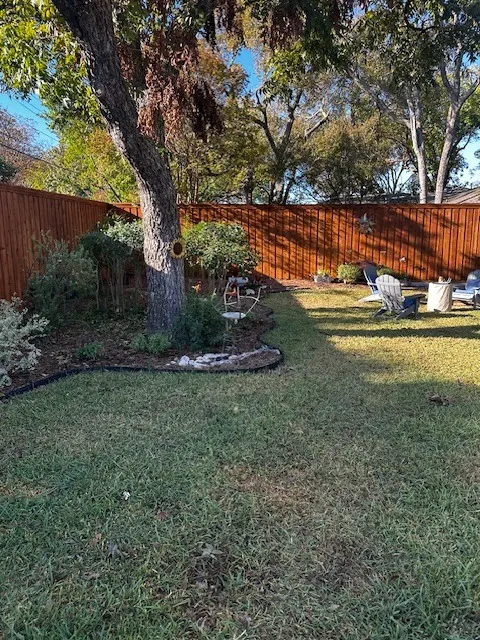
What are the fence rules in Greenway Parks?
Greenway Parks has the most detailed fence section we read, and the city's review checklist singles it out: a consultation with city staff is recommended before you submit fencing in CD 10. The rule changes with what your lot touches. This is Exhibit A (e)(13) in plain order.
- Front yard setback: No fences.
- Interior side yards: Up to seven feet.
- Corner lots on Inwood Road or the Dallas North Tollway: Up to seven feet, not chain link or wire.
- Corner lots on East Greenway, West Greenway and Greenway Boulevard: Up to five feet, at least 20 feet back from the back of the curb, not chain link, wire or wood. Between Drane Drive and West University Boulevard the setback is 12 feet and wood is not excluded.
- Inside a parkway setback: At least 70 percent open, up to five feet, not past the front facade of the house, not chain link, wire or wood.
- Walkway lots and easement lots: Up to seven feet.
What approval does a fence in a conservation district need first?
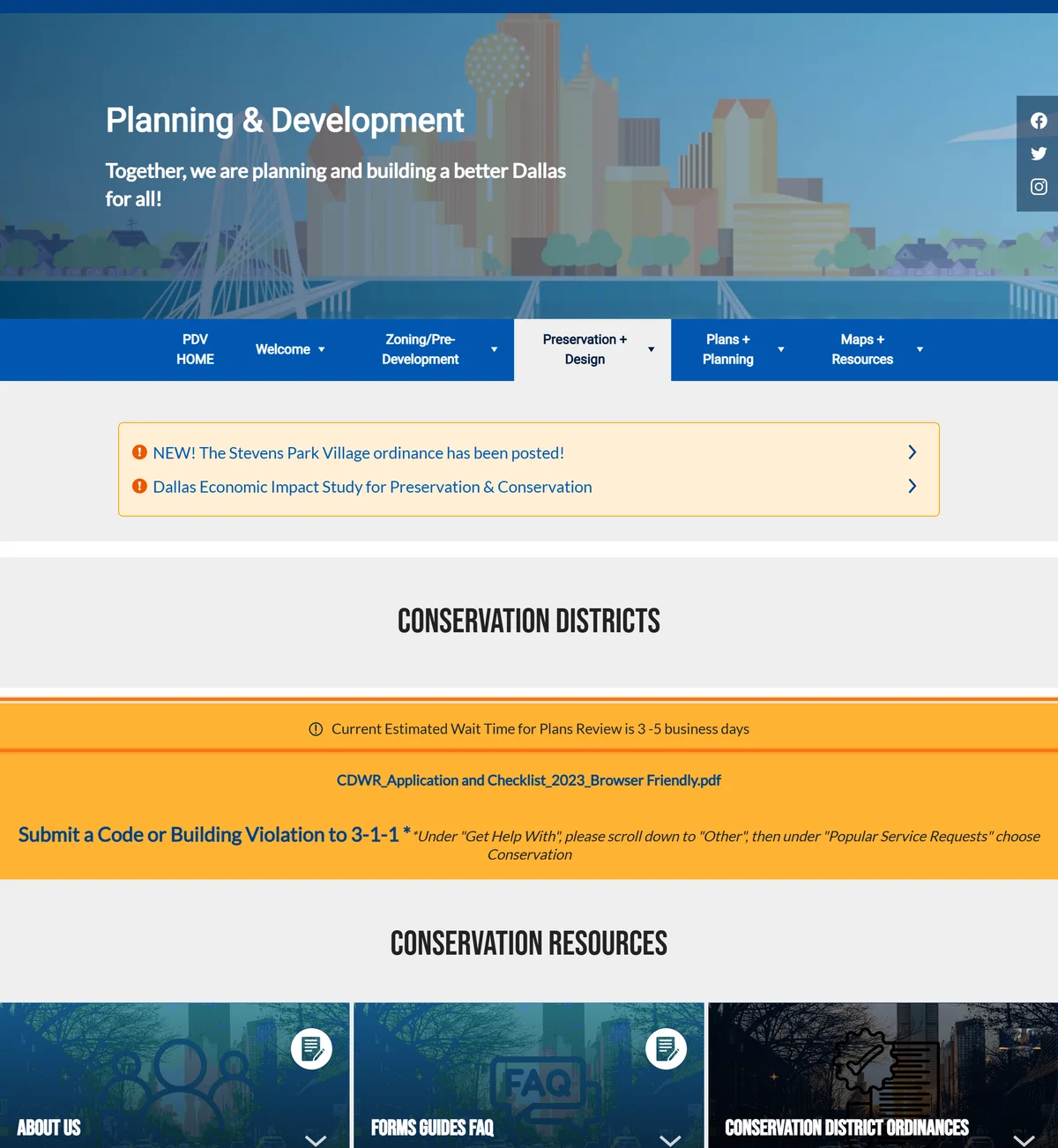
A Conservation District Work Review. You fill in the city's Work Review Form, attach the fence documents and submit them through DallasNow, the online permit portal. A planner checks the fence against the development standards of your district and marks the form approved, approved with conditions or denied.
For a fence, the city checklist asks for a property survey or site plan that clearly shows the locations of existing and proposed fencing, the existing and proposed materials, and the existing and proposed heights. Elevation drawings may be required, depending on the fence type, height, location and need for a permit.
On timing, the conservation districts page showed an estimated wait of 3 to 5 business days for plans review when we checked in November 2026. The ordinances allow more: Greenway Parks and Lakewood Tract IV both give the director 30 days for work that needs a building permit and 10 days for work that does not. If the answer is no, both let you appeal to the Board of Adjustment, within 10 days in Greenway Parks and 20 days in Tract IV.
One wording trap: the city's fence permit checklist says a fence in a conservation district needs an approved Certificate of Appropriateness, while the conservation district office calls its document a Work Review Form. We read both as the district review. The permit itself, when your fence is tall enough to need one, is covered in our Dallas fence permit guide.
How does a Certificate of Appropriateness for a fence work in a historic district?
There are two tracks, and the same application starts both. Minor work is approved by staff as Routine Maintenance. Anything else goes to the Landmark Commission at a public hearing. The Landmark Review Process page says applications go through DallasNow, while the Historic Preservation FAQ still describes handing the application in or emailing it, so ask the planner for your district which applies.
The city's list of common routine items includes one fence: a wood or chain link fence that is not painted or stained and meets the preservation criteria with no exceptions. Routine certificates are processed within 21 days, and the city says most take 7 to 10 business days. Plan a stained cedar fence, an iron fence, a brick wall or any fence that needs an exception as a full review, and decide the finish before you apply.
The full review runs on a monthly calendar. The deadline is typically noon on the fourth Monday. A neighborhood Task Force and city staff each make a recommendation, and the Landmark Commission decides at a hearing that is typically the first Monday of the following month. The signed certificate is sent 10 days after the hearing. Work can start once it is posted on the front of the property and any building permit is in hand.
For a fence, the certificate checklist asks for a site plan with the proposed location, photographs of the area, and an image of the proposed fence with its material and height. The certificate does not replace a building permit, and it lapses if work stops for more than 180 days.
Does replacing an old fence in the same spot still need district approval?
Plan on yes. In a historic district all fences and gates require a certificate before work starts, and even minor repair using the same material and design is on the Routine Maintenance list, which still means a certificate. In a conservation district the review form is required for any work covered by the standards in the ordinance, and fences are covered.
What a replacement can keep is a harder question. An older fence may stand where a new one is no longer allowed, for example in a front yard or right at the front corner of the house. The ordinances handle nonconforming structures in their own sections, and we did not find one rule that applies across districts. Ask the district planner before you take the old fence down.
Do not skip the review. Historic Preservation says work must stop on a notice of violation, and the ordinances carry fines.
Which fence designs fit these districts?
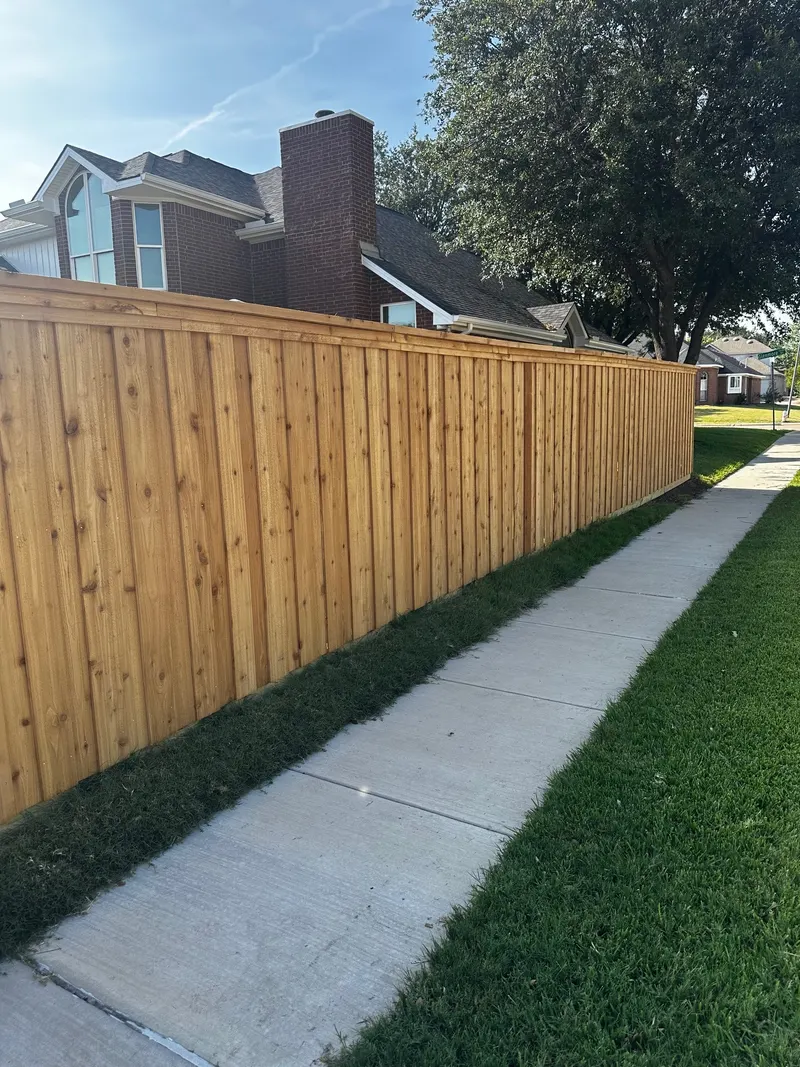
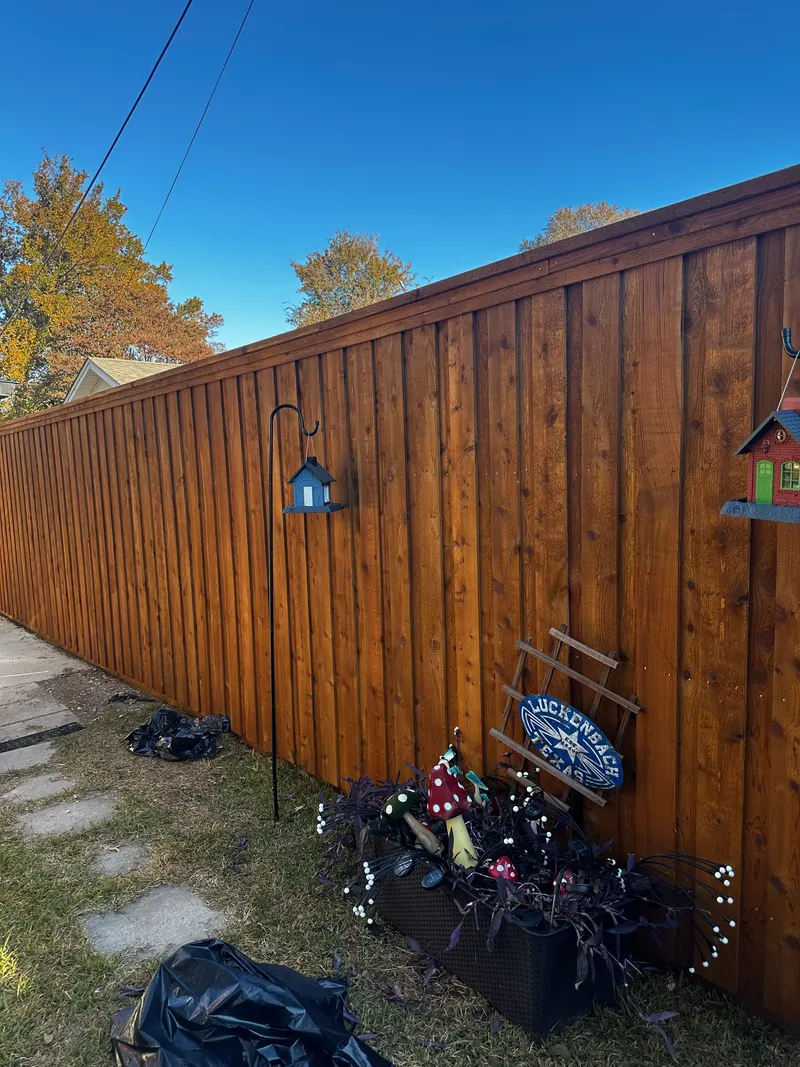
Most of the ordinances repeat the same short list: wood, wrought iron or metal pickets, brick and stone. Those are the materials we work in. Lakewood Tract IV and the M Streets say brick must match the main structure, and our guide to matching brick and limestone columns covers how that is done for masonry walls and columns.
Hollywood/Santa Monica requires metal fences to be typical of the style and period of the house, and Swiss Avenue asks the same of wrought iron. We cover the pairings in fence styles for Tudor, Georgian, Mediterranean and modern homes.
The front yard ban and the setback behind the front corner of the house move the side gate back and leave the front of the lot open. If the height cap leaves a gap in your privacy, our guide to privacy when fence height is limited has options that do not need an exception.
How does Park Cities Fence & Deck handle a fence in a Dallas district?
We start with the address. We look up the zoning, find the tract or area, and read the fence section of that ordinance, so the first design you see is one the district allows. Jack Johnson, our owner, comes out himself and marks where the front corner of the house and any corner lot mid-point put the fence line.
Then we prepare what the review asks for: the site plan with existing and proposed fence lines, materials and heights, and an elevation where one is needed. We file the district application, and the building permit when the fence height calls for one. Private rules can sit on top of the district: see our guide to HOA and deed restrictions.
We do not promise an approval, because the decision belongs to the city. What we can do is submit a fence that matches the ordinance text line by line. If you are replacing a fence anywhere in Dallas, see our fence replacement page, ask for a free written estimate or call (214) 755-8100 with the address. We will tell you which district it is in before we visit.
How Park Cities Fence & Deck helps
Jack Johnson comes out himself, looks at your property and gives you a free written estimate with a timeline. Wood, iron and masonry are all built in-house, so the advice fits the property. Related services: wood fencing, iron / metal fencing, masonry fencing. We work in Lakewood and Dallas and across Dallas.
Questions people ask next
Is all of Lakewood in the Lakewood Conservation District?
No. Conservation District No. 2 covers specific blocks listed in the ordinance, grouped into Tracts I to III from 1988 and Tract IV added in 2025. Many homes that people call Lakewood are outside it. Search your address on the city zoning map, or call us with the address and we will check.
Can I get a taller fence than my conservation district allows?
Not through the work review. The planner can only approve what meets the ordinance, and the appeal to the Board of Adjustment in Greenway Parks and Lakewood Tract IV is limited to whether the director made an error. Ask the district planner before you design around an exception.
Do I need both the district approval and a fence permit?
Often, yes. The district review looks at location, height and materials under the district ordinance. The building permit is a separate step that Dallas requires when a fence is over 4 feet in a front yard or over 6 feet elsewhere. A Certificate of Appropriateness does not replace it. The district approval comes first.
Can I install a driveway gate in a Dallas conservation or historic district?
The historic district ordinances we read treat a gate as part of the fence. Junius Heights and Swiss Avenue both define a fence as including a fence gate, and Historic Preservation says all fences and gates need a certificate. There the gate follows the same location, height and material rules as the fence. In a conservation district, show the gate on the same site plan and let the planner confirm it.
Sources and further reading
- City of Dallas Planning & Development: Conservation Districts
- City of Dallas: Introduction to Conservation Districts (PDF)
- City of Dallas: Conservation District Work Review Form, Application and Checklist (rev. 07-14-2025)
- City of Dallas: CD 2 Lakewood district page (ordinances and tract map)
- City of Dallas Ordinance No. 20009: Conservation District No. 2, Lakewood, Tracts I to III
- City of Dallas Ordinance No. 33026: Conservation District No. 2, Lakewood, Tract IV
- City of Dallas Ordinance No. 25116: Conservation District No. 9, M Streets (Greenland Hills)
- City of Dallas Ordinance No. 28946: amendment to Conservation District No. 9
- City of Dallas Ordinance No. 32107: Conservation District No. 11, M Streets East
- City of Dallas Ordinance No. 26884: amending Conservation District No. 6, Hollywood/Santa Monica
- City of Dallas: Conservation District No. 10, Greenway Parks ordinance
- City of Dallas Historic Preservation: Landmark Districts (list and map)
- City of Dallas Ordinance No. 26331: Junius Heights Historic District (H/128)
- City of Dallas: Swiss Avenue Historic District ordinance, codified (PD 63, Article 63)
- City of Dallas Historic Preservation: Landmark Review Process
- City of Dallas Office of Historic Preservation: FAQ
- City of Dallas: Certificate of Appropriateness submittal checklist
- City of Dallas: Fence Permit, Pool Barrier and Retaining Wall Checklist
- City of Dallas zoning map
General information, not legal advice. Rules change: we confirm the current requirements with your city or HOA before we build.